


Webinarios para a preparación de propostas á convocatoria Consolidator Grant 2023 (USC)
Horizonte Europa – ERC Consolidator Grant 2023
Webinarios para a preparación de propostas á convocatoria Consolidator Grant 2023
Nos próximos días, a Fundación Española para a Ciencia e a Tecnoloxía (FECYT), e a Axencia Galega de Innovación (GAIN) van organizar varios seminarios para dar apoio na preparación de solicitudes para a convocatoria ERC Consolidator Grant 2023.
A convocatoria Consolidator Grant 2023 está aberta a investigadores e investigadoras de calquera nacionalidade que conten con 7 a 12 anos de experiencia desde a finalización do seu doutoramento. O financiamento estándar cubre ata 2 millóns de euros por un período de 5 anos, cubrindo ata o 100% dos custos totais elixibles e unha contribución do 25% dos custos indirectos.
Curso de Python
PROFESORES: Pablo Coello Pulido, Economista, analista de datos, desarrollador e investigador en Opseeker y Beway, e Francisco Camiña Ceballos, biólogo e doutor en xenética humana pola USC
Temario
Primera parte: elementos básicos de programación en Python
Cunha duración estimada de 6 horas (3 sesións de 2 horas) de clase máis unha de tutorías. As clases consisten nunha primeira parte de teoría exemplificada con exercicios resolots polo profesor.
Aparte, entregaranse aos alumnos exercicios (coas súas solucións) para complementar o temario e practicar entre sesións. No caso de ter dúbidas sobre os exercicios poderanse consultar por email aos profesores ou na sesión de tutorías.
A sesión de tutorías está pensada para resolver dúbidas tanto das clases como dos ejercicios.
Apartados do temario:
- Introducción e set up
- Elementos básicos
- Condicionais
- Estruturas de datos en Python
- Bucles
- Funcións
Segunda parte: Numpy y pandas
Cunha duración estimada de 6 horas (3 sesións de 2 horas). A mecánica das clases é similar á da primeira parte: Teoría e exercicios resoltos polo profesor en clase e exercicios con solucións para practicar entre sesións.
Ao final desta parte propondrase un pequeno proxecto para que resolvan os alumnos. Explicarase durante a última hora da terceira sesión desta parte, entregarase coa súa solución (o unha posible solución) e a última sesión do curso consistirá en 2 horas de tutorías para solucionar dudas sobre o proxecto e a segunda parte do curso.
Apartados do temario:
- Series: ¿Qué son? e métodos
- Dataframes: introdución
- Múltiples dataframes
- Dataframes: principáis métodos.
- Visualización
- Proxecto
JRC B2 Seminar: "A new poverty indicator for Europe: The extended headcount ratio" - Tim Goedemé
ABSTRACT:
The methodology currently used to measure poverty in the European Union faces some important limitations. Capturing key aspects of poverty is done using a dashboard of indicators, which often tell conflicting stories. We propose a new income-based measure of poverty for Europe that captures in a consistent way in a single indicator the level of relative poverty, the intensity of poverty, poverty with a threshold anchored in time and a pan-European perspective on poverty. To do so, we work with a recently developed poverty index, the extended headcount ratio (EHC) and derive the relevant poverty lines to apply the index to poverty in Europe. We show empirically that our measure consistently captures the aspects typically monitored using a variety of indicators and yields rankings that seem more aligned with intuitions than those obtained by these individual indicators. According to our measure, Eastern Europe has a much higher level of poverty than Southern Europe, which, in turn, has a considerably higher level of poverty than North-Western Europe. In North-Western Europe, the evolution of our measure over time correlates most strongly with the at-risk-of-poverty rate, while in Southern and Eastern Europe, it correlates most strongly with at-risk-of-poverty with the threshold anchored in time.
SPEAKER:
Tim Goedemé is Senior research fellow of the Herman Deleeck Centre for Social Policy (University of Antwerp), where he directs research on poverty and social protection, and Associate Member of the Institute for New Economic Thinking at the Oxford Martin School (University of Oxford), where he is involved in the ‘Employment, Equity and Growth Programme’. His research topics include the definition and measurement of poverty and human needs in high-income countries, the adequacy and effectiveness of social policies, as well as environmental sustainability and the welfare state. Recently, he became responsible for setting up the research programme of the new Belgian Federal Institute for the protection and promotion of Human Rights.



JRC B2 Seminar: "Wealth Inequality Dynamics in Europe and the United States: Understanding the Determinants" - Clara Martínez-Toledano
Abstract
This paper studies the interaction between the long-term dynamics of aggregate household wealth and the wealth distribution in Europe and the United States. We do so by building the first Distributional Wealth Accounts for Europe, including households’ assets, liabilities, investment flows, and the wealth distribution for most European countries from 1970–2020. We find that although aggregate household wealth to income ratios have followed a similar increasing pattern in both Europe and the United States since 1970, wealth concentration has increased much faster in the United States. Using wealth accumulation decompositions and counterfactual simulations, we show that the weaker rise in labor income inequality and the stronger rise in house prices relative to financial assets in Europe versus the United States seem to explain why Europe has experienced a more moderate rise in wealth concentration since the mid-1980s.
Speaker
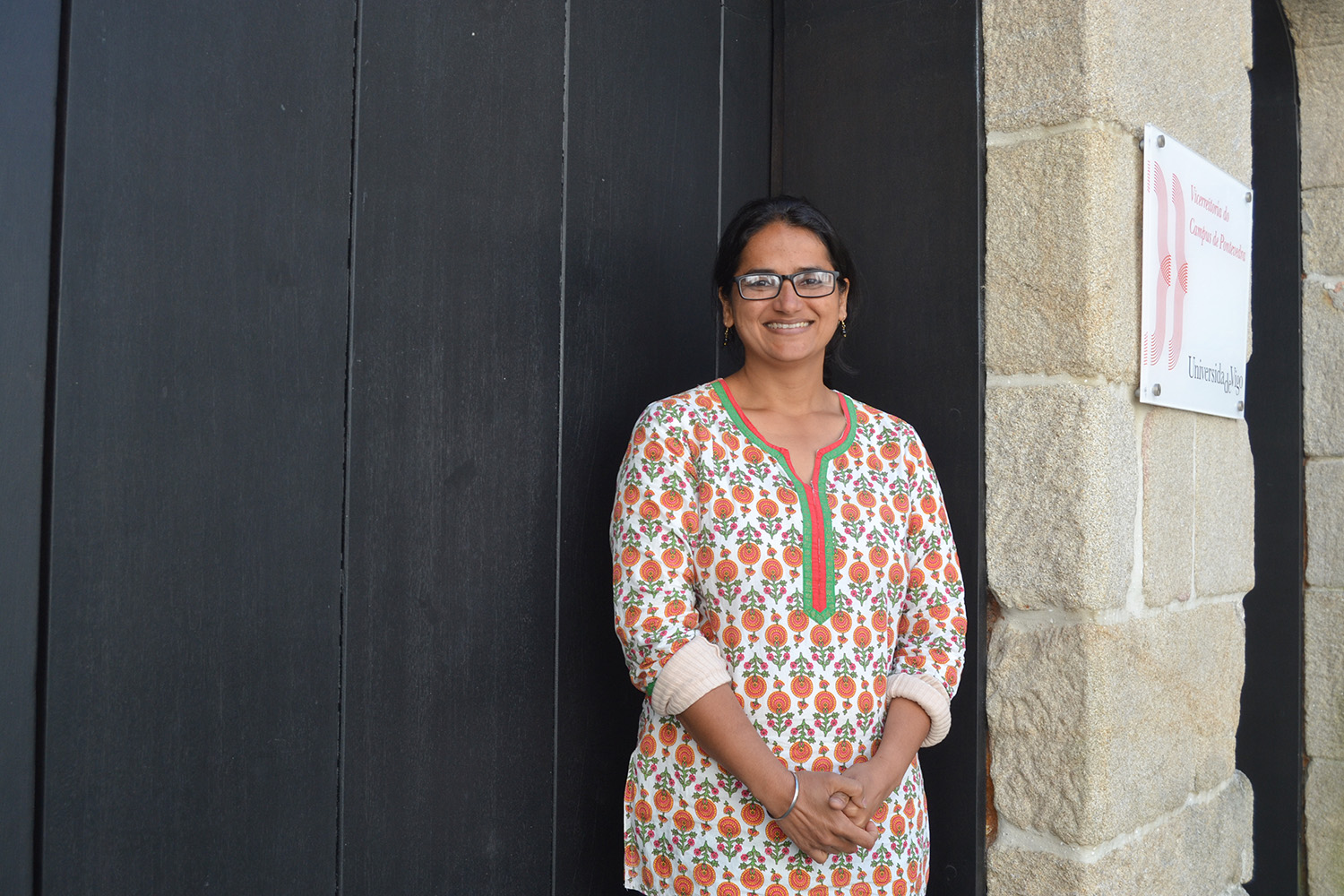
Clara Martínez-Toledano is an Assistant Professor of Financial Economics at the Imperial College London, and Wealth Distribution Coordinator at WID.world. Before joining Imperial, she was a Postdoctoral research scholar at Columbia Business School. Her research interests are on household and public finance. Recent work focuses on understanding the determinants of wealth accumulation and wealth inequality dynamics within and across countries.
